
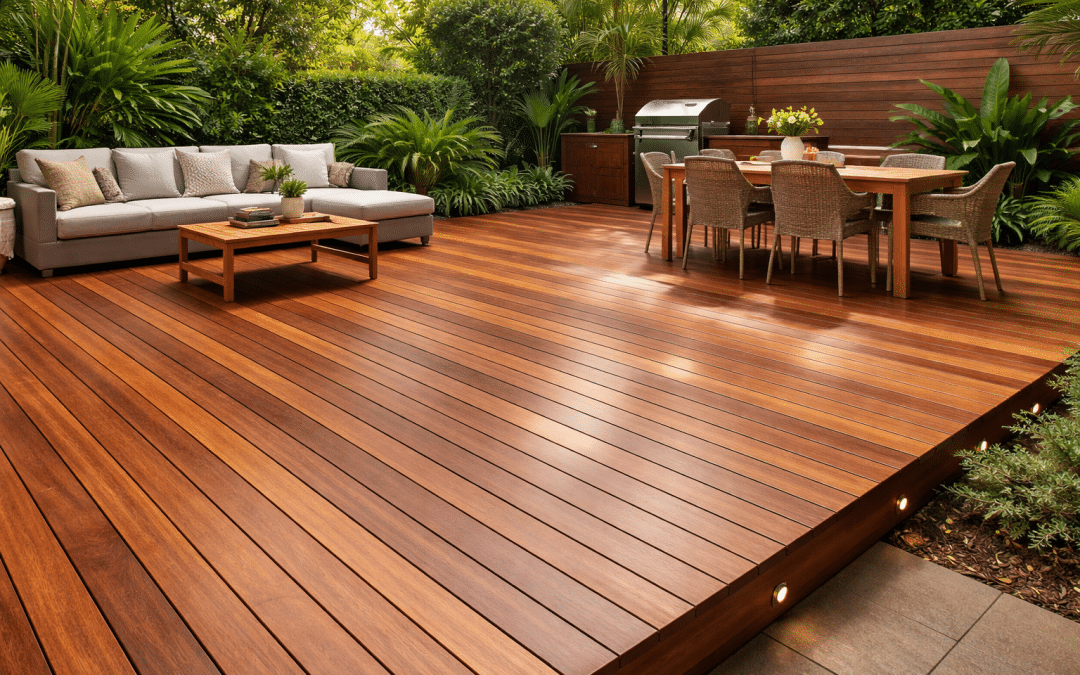
The timeless beauty of Merbau Decking is frequently the first step in turning your backyard into a high-end outdoor retreat. This hardwood is a must-have for outdoor living in Australia because of its deep, wine-red colours and legendary durability. However, keeping it in top shape needs more than just an occasional hose-down. Proper care is what makes the difference between a weathered surface and a lifelong investment. This includes regulating the first “bleed” of tannins and keeping the wood safe from the intense sun in the Southern Hemisphere. Taking care of your Merbau Decking properly can keep your entertainment room the focus of your house for many years to come, whether you’re putting in a new one or fixing up an old favourite.
Where does the wood for Merbau come from?
A lot of people who care about the environment want to know: Where does merbau timber come from? This tough hardwood comes from the Indo-Pacific region, which includes sections of Southeast Asia, Papua New Guinea, and the Pacific Islands.
The wood has adapted to endure a lot of wetness and humidity because it grows in tropical rainforests. But because it is so popular, it is important to get your resources from trusted providers like Austimber, which focuses on sustainably harvested timber. You can be sure that your Merbau Decking fulfils Australian regulations for moisture content and structural integrity by choosing high-quality providers like Austimber. This lowers the chance of warping or cupping after installation.
The Pre-Maintenance Phase: Dealing with Tannin Bleed
“Tannin bleed” is the most well-known (or infamous) thing about a new merbau timber deck. Merbau has a lot of water-soluble tannins in it. When the wood gets wet for the first time, whether from rain or a hose, it lets off a dark, tea-colored liquid.
If you don’t take care of this liquid, it might leave permanent stains on light-colored concrete, pavers, or pool copings. Many experts say that the best way to deal with this is to “pre-weather” the deck by hosing it down every day for a few weeks or using a specific tannin stripper. During this first step, suppliers like Austimber often tell clients to put down plastic drop sheets on their site to catch any runoff. Your Merbau Decking is ready to be cleaned and sealed once the tannins have been removed.
Step-by-Step: How to Clean Your Merbau Deck
Cleaning merbau timber decking is not the same for everyone. It needs a mix of chemical action and physical movement.
- Get ready: Begin by taking out all the pots and furniture. To clean the Merbau Decking surface, use a stiff broom to sweep away debris and leaves.
- Using chemicals: Use a special wood cleaner that has oxalic acid in it. This acid is needed to “brighten” the wood and get rid of any tannins that are still there.
- The Scrub: Use a stiff-bristled brush made of plastic to scrub the cleaner into the wood. Concentrate on locations that get a lot of foot traffic and where dirt builds up the most.
- The Rinse: Get rid of the chemical with a yard hose. Be thorough; chemicals left on the wood can make it harder for the final oil coating to stick.
Expert FAQ: The Seven Most Important Questions Answered
We put together a list of the most common questions that Australian homeowners have about their Merbau Decking to assist you learn how to take care of it.
1. How can I keep Merbau tannins from leaving stains on my concrete?
You need to either pre-weather the wood or apply a tannin remover right after installation to stop reddish-brown tannin “bleed.” If your deck is already bleeding, spraying it with water often will help it heal faster. Use a temporary plastic drop sheet or a special concrete sealant to protect the concrete around it. If you have stains, use a solution of oxalic acid or a store-bought deck cleaner to get rid of them. Before putting any oil on Merbau, it’s recommended to let it sit outside for 4 to 6 weeks or use a “power prep” chemical cleaner to lock in the tannins.
2. How do you clean a Merbau deck before putting oil on it?
To start, sweep the deck to get rid of any loose dirt. While the wood is still wet, use a special deck cleaner that usually has oxalic acid in it. Use a stiff-bristled synthetic brush to scrub the surface. Don’t use wire brushes because they can hurt the wood fibres. Wait 10 to 20 minutes for the solution to rest, making sure it doesn’t dry up. Then, use a garden hose to rinse it off well. This process opens the grain, gets rid of grey “dead” wood cells, and neutralises any tannins that are still there. This makes sure that the new oil can get deep into the Merbau Decking.
3. Is it okay to use a power washer on Merbau decking?
Yes, but you need to be very careful. Even though merbau is a hardwood, strong pressure can still “fur” the wood, which can cause splinters and permanent scars. Set the pressure low and use a broad fan nozzle. Keep the wand at least 30 cm away from the surface. Always go with the grain. Don’t ever use a “turbo” or revolving nozzle since they are extremely rough on wood. For the best results, only use a pressure washer to rinse off chemical cleansers. Don’t rely on the water pressure to get rid of dirt or stains.
4. What is the best cleaner for Merbau decks in Australia?
Oxalic acid-based cleansers, such as Cabot’s Deck Clean or Intergrain UltraPrep, are the best for most Australian decks. They do a good job of “brightening” the wood by getting rid of grey aged lignin and tannin stains. If your deck is very dirty and has old, peeling oil on it, you might need to use a sodium hydroxide-based stripper to get rid of the old coating first. If you want to clean your own home, a mixture of Napisan (sodium percarbonate) can work, but professional-grade acidic cleaners make the surface more even and neutral.
5. How do I get rid of the grey weathering on antique Merbau?
When the wood is exposed to UV light, it breaks down the cells on the surface, which makes it look grey. You need a chemical repair to get the original deep red colour back. Use a wood brightener that has oxalic acid in it. This chemical reacts with the greyed fibres and iron stains to “bleach” the wood back to its natural colour. Put the cleanser on a wet deck, scrub it hard, and then rinse it off. If the wood is very weathered or feels fuzzy, you will need to lightly sand it with 80-grit sandpaper once it has dried to show fresh wood before you re-oil it.
6. Should I sand Merbau before I clean and oil it?
Not all the time. A chemical clean is generally enough to get the surface ready if the deck is fairly fresh or in good shape. But you should sand if the wood is splitting, has significant scratches, or has a thick, peeling old layer that cleaners can’t get rid of. Cleaning alone doesn’t open the pores of hardwood as well as sanding with 80-grit paper does, which lets the oil sink in more deeply. A mild sanding is usually a good idea to get the smoothest finish and the longest life out of your oil.
7. Where can I get oxalic acid to clean my deck?
Major hardware stores like Bunnings or Mitre 10 are the best places to buy oxalic acid in Australia. “Deck Clean” is the most popular name for it when it is sold as a pre-mixed liquid. You may also get it as a concentrated powder, which is cheaper for big areas because you can mix it with water yourself. Always wear gloves and eye protection when you work with these chemicals because they can be moderately corrosive.
Final Steps: Oiling vs. Staining
The last step is to safeguard your merbau timber deck once it has been cleaned and dried. You usually have two options for your Merbau decking: coatings that are water-based or oil-based.
- Oil-Based: These give a classic look and soak deep into the wood. They are great for keeping the wood flexible and stopping it from cracking.
- Water-Based: These sit more on the surface and usually protect against UV rays better, which is very important in Australia’s harsh climate.
When you put on the finish, make sure to work in the direction of the grain and do one board at a time to eliminate lap marks. If you got your wood from an expert like Austimber, ask them what kind of coating they recommend. The amount of moisture in the wood when it is installed can affect which treatment works best.
A merbau timber deck is a beautiful addition to any home. It adds warmth, lasts a long time, and gives the property a sense of elegance. You can better comprehend what is merbau timber and how to take care of it if you know where it comes from. If you’re dealing with initial tannin bleed or recovering an old surface, the most important thing is to be consistent.
Your merbau timber decking will look great for years to come if you have the correct tools, put in some hard work, and choose high-quality materials from professionals like Austimber.