
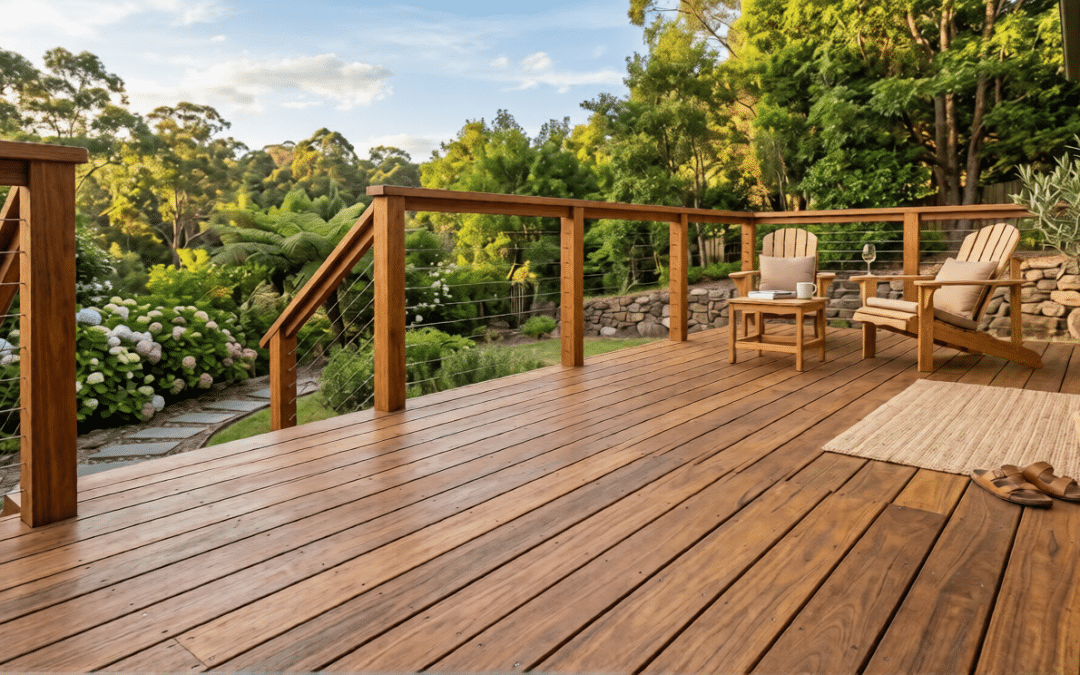
Choosing the proper decking lumber is the most important decision you can make when building a deck. It will shape the outdoor lifestyle of your home. Because of Australia’s severe UV rays and changing humidity, choosing a material based only on pricing might cause it to bend, decay, and need expensive repairs in just a few years. If you like the rich, natural look of hardwood or the low-maintenance promise of modern options, it’s important to know how different species do in your area. We’ll go over all you need to know in this guide to make sure your pick lasts and adds value to your property.
The Type of Wood You Choose: Hardwood or Softwood
When it comes to decking, the most typical question homeowners have is whether to choose hardwood or a treated softwood like pine. Most of the time, this choice boils down to how long it lasts against how much it costs up front.
- Hardwoods: Trees that grow slowly, such Spotted Gum, Merbau, and Ironbark, make these woods. They are thicker, hard to scratch, and can persist for 25 to 40 years or more.
- Radiata Pine is a softwood that has been chemically treated to keep pests and rot at bay. It is the cheapest decking wood, but it is easy to damage and usually only lasts 10 to 15 years.
Hardwood decking lumber is usually always the best choice for long-term investments in family spaces with a lot of foot traffic.
Finding the Best Decking Timber: Top Species
You will probably find a few regular winners when you look for the best decking wood. People all around the world love merbau decking wood because it lasts a long time and has a beautiful reddish-brown colour. This wood is naturally resistant to decay, hence it is a Class 1 durability wood. But keep in mind that Merbau can “bleed” tannins when it first gets wet, which can leave stains on nearby pavers.
Spotted Gum is a high-quality decking wood that is popular for its bright grain and low shrinkage. If you want a local look, this is a great choice. It is also naturally fire-resistant, which is why it is so common in homes in areas prone to bushfires in Australia.
How long will your deck really last?
The “Durability Class” of the wood determines how long it will last.
- Class 1 (Ironbark, Merbau): 40 years or more above ground.
- Class 2 (Spotted Gum, Blackbutt): 15 to 40 years.
- Class 4 (Treated Pine): 5 to 15 years.
Things like direct contact with the soil or bad ventilation can cut these estimates down by a lot. A deck that is cleaned and oiled every year will endure at least ten years longer than one that isn’t.
The Grey Look: Style vs. Care
Many modern building styles use grey decking wood because it seems like it’s been battered by the sea. There are two ways to do this. First, you can pick a high-quality decking wood and let it weather on its own for 6 to 12 months. The sun’s UV rays will fade the natural colours, creating a silver patina.
If you want the beauty without the structural deterioration of untreated wood, you can also use a specific tint. Using a good oil on grey decking wood keeps the wood flexible and free of cracks, and it keeps that ash-toned tint. Even the greatest decking wood will eventually ‘check’ (have cracks on the surface) if it doesn’t get oil.
The Big Debate: Timber vs. Composite
Is wood or composite better? Merbau decking wood is the most beautiful natural wood and stays cooler underfoot throughout a hot Australian summer. Composite, on the other hand, is almost “set and forget.” The feel of wood is the best for a weekend DIY project. Composite might be the way to go if you desire a life with no upkeep, even though it costs more up front.
Technical Setup to Keep Warping from Happening
The best way to keep your hardwood decking boards from warping or “cupping” is to give them plenty of air. There needs to be at least 300mm of space under the framework so the boards can breathe. Always leave a space of 4mm to 6mm between boards so they can expand. If the bottom of the board stays wet while the top dries in the sun, the board will bend.
Choosing the Final Budget
How much does it cost? In Australia, you should expect to pay:
- Treated pine costs between $200 and $350 per square metre to install.
- The cost of installing merbau decking wood is between $450 and $600 per square metre.
- For premium decking wood like Spotted Gum or Ironbark, it costs $600 to $800 per square metre to install.
Keep in mind that the boards are only roughly 30% of the total cost of the project. Don’t cut corners on the sub-frame or the stainless steel fasteners. Choose a traditional merbau decking timber or a local hardwood decking timber, but make sure to pick one with a good durability rating so that your investment lasts.
FAQs
1. Do I need permission from the council to build a wooden deck?
You don’t require a permit for a “low-level” deck (usually less than 600mm high and less than 25$m^2$) in many parts of Australia as long as it doesn’t compromise drainage or the safety of the structure. But the restrictions are very different in different jurisdictions (like NSW and VIC) and even in different local councils. A building permit is nearly always required if your deck is high up, close to a property line or in an area that is prone to bushfires. Before you start building, always check with your local government or a professional certifier to avoid big fines or having to take down the building.
2. How can I pick the correct “Hazard Class” (H-Rating) for my deck?
When you buy the sub-frame (the structure underlying), you’ll notice ratings like H3 or H4. This shows how much chemical treatment the wood has had to keep it from rotting and getting termites:
- H3: Made to be used “Above Ground.” This is great for the decking boards and the joists that aren’t touching the ground.
- H4: Made for usage “in the ground.” You need to use H4 or higher for any posts that are buried in dirt or concrete.
If you use H3 wood that touches the ground, it will break down in just a few years.
3. Why are red stains “bleeding” on my tiles from my new deck?
This happens when tannins leach out of the wood, which is a natural process that happens when oils that dissolve in water wash out. Most of the time, it happens with Merbau and some Eucalypts. The red-brown run-off can create stains that are hard to get rid of if your deck is close to light-colored pavers or a pool. You can “bleed” the wood yourself by hosing it down and washing it with a deck cleanser many times before sealing it. Alternatively, you can buy “pre-leached” or “pre-sealed” boards from your provider.
4. Is it possible to install a wooden deck right on top of concrete?
Yes, but you can’t put the boards right on the concrete. To make an air gap, you need to put in a “sleeper” system or low-profile joists. The gap should be at least 50mm wide, but more is better. If there is no airflow, moisture will get stuck between the wood and the concrete, which will cause it to rot, mould, and warp quickly. Also, make sure the concrete has a modest slope so that water doesn’t collect under your joists.
5. How can you keep wood planks from breaking?
When the wood dries up and the fibres pull apart, it commonly splits or “furs.” Regular oiling is the greatest way to keep things from happening. A good decking oil gets into the fibres and keeps them flexible and moist. You will need to sand the surface back to smooth wood before putting on a new layer of oil if your deck is already splintering. If you want to avoid splinters in high-traffic places where people walk barefoot, like around a pool, choose a high-density hardwood like Spotted Gum instead of a softer wood like Pine.